

Партнер
АТ «Прозорро.Продажі» адмініструє дворівневу електронну торгову систему, яка об’єднує центральну базу даних та акредитовані електронні майданчики.
Через систему проводять аукціони з продажу й оренди державного, комунального та приватного майна, активів банків-банкрутів, земельних ділянок, спеціальних дозволів та інших активів і прав.
Система відкриває бізнесу й громадянам доступ до аукціонів, забезпечує однакове поширення інформації про лоти між майданчиками та дозволяє кожному стежити за перебігом торгів онлайн.
Задачі
Виклики

Оновлювати систему, яка працює 24/7
Продуктивне середовище безпосередньо обслуговувало електронні аукціони. Збій міг вплинути на приймання заявок, проведення торгів і формування результатів.

Дотримуватися нормативних вимог
Логіка ЕТС мала відповідати нормативно-правовим актам, які регулюють її роботу. Технічні зміни не могли суперечити встановленим правилам проведення аукціонів.

Зберігати цілісність даних і результатів
Система фіксує дії учасників, зберігає перебіг торгів і формує підсумкові протоколи. Оновлення не мали порушувати обробку даних, документів або результатів аукціонів.

Узгоджувати ЦБД2 з електронними майданчиками
Дворівнева архітектура поєднує центральну базу даних та електронні майданчики через API. Зміни в ЦБД2 мали забезпечувати коректний обмін даними між усіма компонентами.

Контролювати оновлення у трьох середовищах
Нові версії послідовно проходили тестове, дублююче та продуктивне середовища. Команда мала виявляти конфлікти версій, підтримувати зворотну сумісність і не переносити технічні ризики на чинні торги.
Рішення
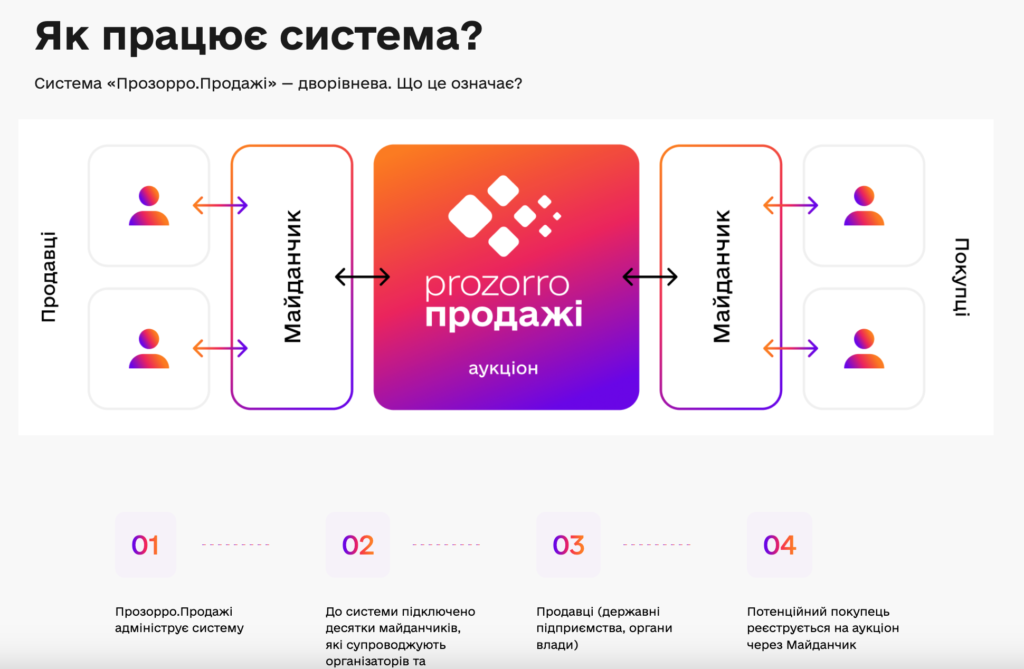
Єдині правила, різні точки доступу
Prozorro.Продажі працює за принципом, схожим на взаємодію фондової біржі та брокерів. Центральна база даних підтримує єдині правила аукціонів, а майданчики надають користувачам доступ до торгів.
Організатор публікує лот через обраний майданчик. ЦБД2 приймає інформацію та передає її іншим підключеним майданчикам. Учасник може знайти лот і долучитися до аукціону через зручний сервіс.
Жоден майданчик не отримує виключного доступу до окремих лотів. Тому майданчики конкурують не обсягом доступних даних, а зручністю, підтримкою та якістю обслуговування.
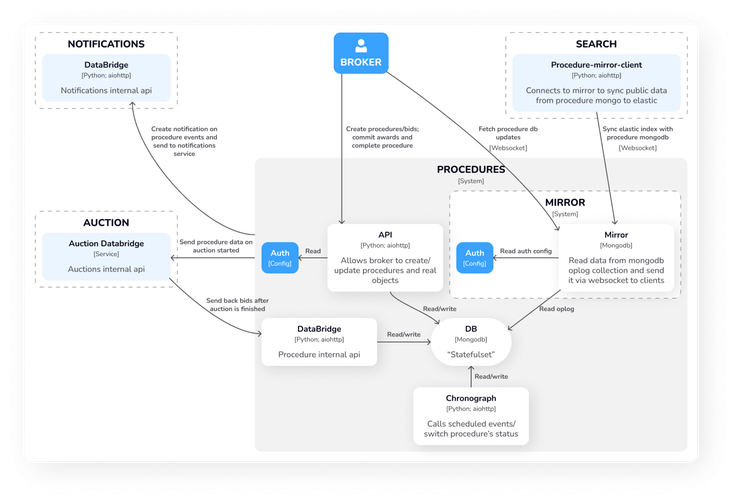
Єдина логіка для всього циклу аукціону
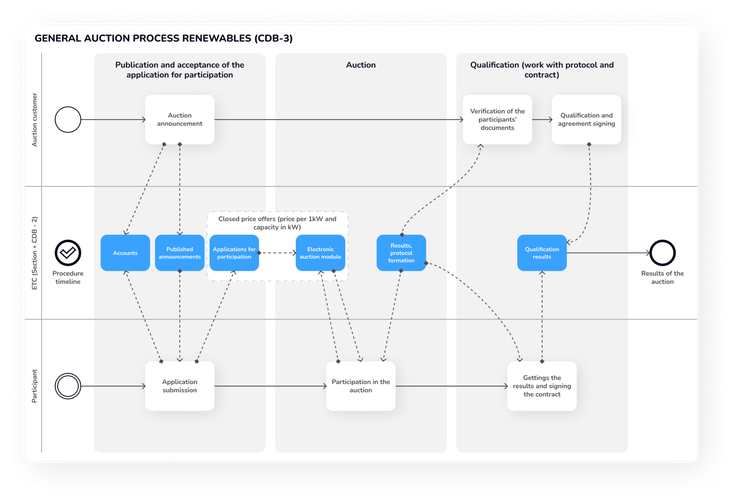
Модуль процедур керує життєвим циклом аукціону: від публікації оголошення до передавання результатів. Він зберігає статуси, часові етапи, структуровані дані та електронні документи.
Електронні майданчики взаємодіють із модулем через API. Пов’язані сервіси відповідають за пошук, сповіщення, збереження даних і передавання інформації до модуля аукціонів.
Такий поділ зберігає однакову логіку процедури незалежно від майданчика, який обрав організатор або учасник.
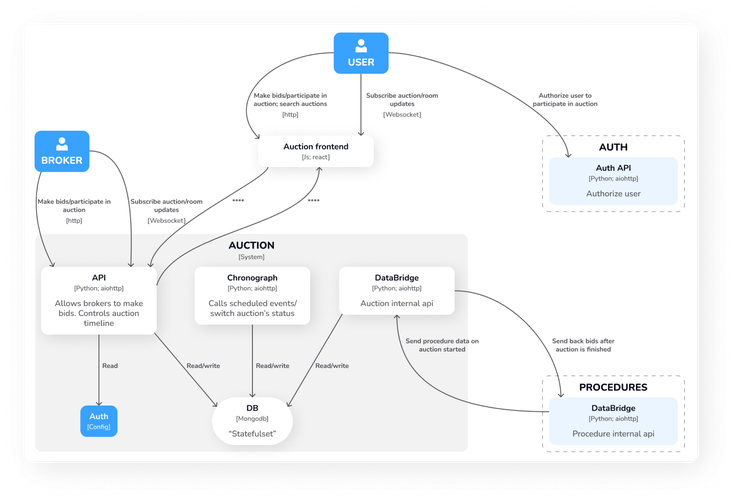
Окремий контур для проведення торгів
Коли починаються торги, модуль аукціонів отримує потрібні дані від модуля процедур. Він авторизує учасників, приймає ставки, керує часовими подіями та фіксує перебіг аукціону.
Після завершення торгів модуль передає результати назад до відповідної процедури. Відокремлена архітектура дозволяє розвивати механіку аукціонів без змішування її з публікацією лотів, документами та кваліфікацією.
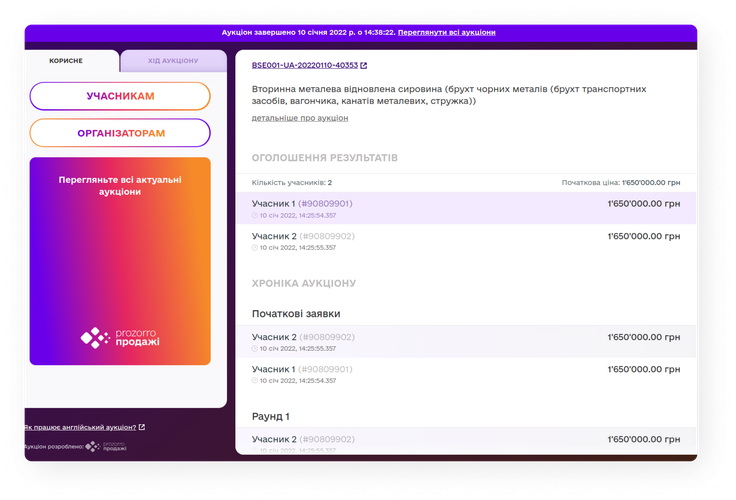
Перебіг торгів видно в реальному часі
Інтерфейс показує поточний етап, хронологію, ставки та результати аукціону. Під час торгів система позначає учасників номерами, не розкриваючи їхні назви у самому процесі подання ставок.
Після завершення аукціону користувачі можуть переглянути результати відповідно до правил конкретної процедури. Такий підхід поєднує конкуренцію під час торгів із перевірюваністю їхнього результату.
Жодна зміна не потрапляє на торги без перевірки
Кожне доопрацювання проходило визначений цикл: оцінювання, розробку, демонстрацію, функціональну перевірку та технічне приймання.
Критерії готовності включали щонайменше 75% покриття коду юніт-тестами, інтеграційні тести ключових процесів, зворотну сумісність і оновлену документацію.
Після перевірок нові версії послідовно застосовувалися в тестовому, дублюючому та продуктивному середовищах. Це зменшувало ризик перенесення конфліктів або помилок у чинні аукціони.
Технології
 Aiohttp
 MongoDB
 Elasticsearch
 Prometheus
 Grafana
 GitLab CI
 HELM
HELM
 Swagger
 GitLab
 Python
 Kubernetes
 Docker
Результати

Понад 138,6 млрд грн до бюджетів
Станом на вересень 2026 року продажі й оренда через електронні аукціони Prozorro.Продажі принесли понад 138,6 млрд грн до державного та місцевих бюджетів.

Понад 40 електронних майданчиків
Учасники можуть обирати зручний акредитований майданчик, не втрачаючи доступу до пропозицій системи. Кожен новий лот автоматично з’являється на всіх підключених майданчиках.

16 напрямів роботи
Через систему проводять малу й велику приватизацію, оренду державного та комунального майна, земельні торги, продаж активів банків, санкційного майна, спеціальних дозволів та інших активів і прав.

Відкриті дані про торги
Інформація про лоти, перебіг аукціонів і результати доступна публічно. Спостерігати за торгами онлайн може кожен — це створює основу для суспільного контролю за реалізацією державних активів.

Ринкова ціна через конкуренцію
Відкриті електронні аукціони допомагають перетворювати невикористовуване майно на ресурс для бізнесу, громад і держави, а конкурентна боротьба учасників формує справедливу ціну.

Незалежний нагляд
До Наглядової ради АТ «Прозорро.Продажі» входять представники держави та незалежні експерти. Така модель підтримує баланс компетенцій, стратегічне управління та інституційну сталість Партнера.
Станьте нашим партнером, щоб гарантувати успіх вашого проєкту
Наша команда експертів перетворює ваше бачення на цифрове рішення.
зворотній зв’язок